
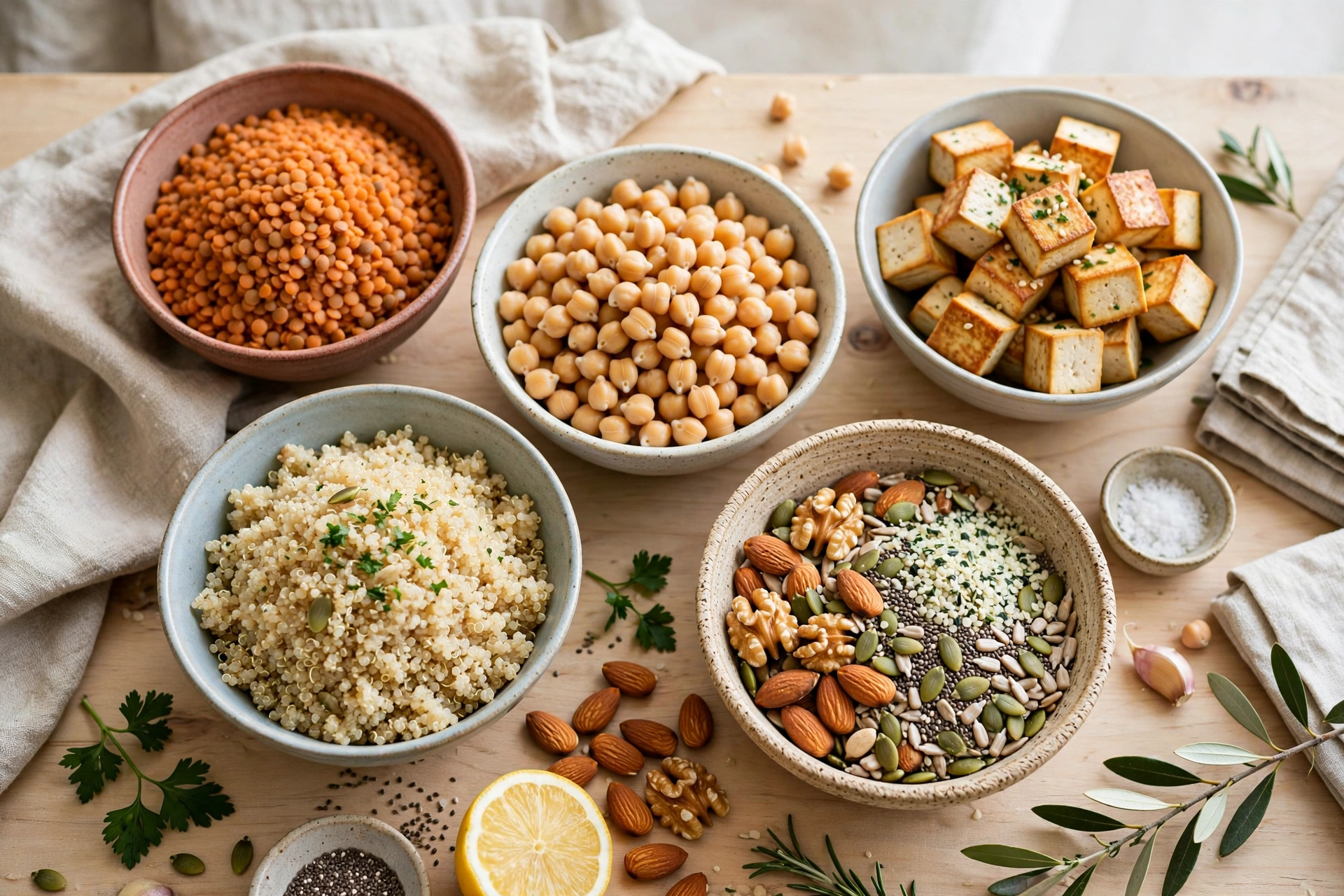
It is the first question almost every new vegan is asked, usually within a day of mentioning their diet: but where do you get your protein? The concern sounds reasonable, because protein matters. It builds muscle, supports the immune system, and keeps you feeling full between meals. The reassuring truth is that a well-planned vegan diet can cover your protein needs comfortably. What it takes is a little knowledge about which plant foods carry the most protein, and how to build them into ordinary meals.
How Much Protein Do You Actually Need?
Most adults need roughly 0.75 grams of protein per kilogram of body weight per day, with higher amounts for athletes, older adults and people recovering from illness. For a person weighing 70 kilograms, that works out at around 52 grams a day, an amount that is surprisingly easy to reach once protein-rich plant foods appear at most meals. The overview of protein from Harvard’s Nutrition Source is a helpful reference for how protein works in the body and why the package a protein comes in, the fibre, fats and micronutrients eaten alongside it, matters as much as the grams themselves.
The Best Plant Protein Sources
Lentils, Beans and Chickpeas
Pulses are the backbone of vegan protein. Cooked lentils provide around 18 grams of protein per cup, black beans and kidney beans around 15 grams, and chickpeas a similar amount. They are inexpensive, filling, high in fibre and iron, and endlessly versatile, from dals and curries to soups, stews and salads.
Tofu, Tempeh and Edamame
Soy foods are the heavy lifters. Tofu offers roughly 10 grams of protein per 100 grams depending on firmness, tempeh closer to 19 grams, and edamame makes a protein-rich snack straight from the pod. Because soy contains all nine essential amino acids in useful proportions, it is the closest plant equivalent to the complete proteins found in animal foods.
Grains, Nuts and Seeds
Quinoa provides about 8 grams of protein per cooked cup and is also a complete protein. Oats, wholewheat pasta and brown rice contribute steady amounts through the day. Nuts and seeds are more concentrated: peanut butter delivers around 8 grams per two tablespoons, while pumpkin seeds, hemp seeds and chia seeds add protein alongside healthy fats and minerals. A spoonful of seeds over porridge or a salad quietly adds up.
Reading labels is a useful habit here too. Our guide to what to look for beyond the label on packaged foods explains how marketing claims can hide the real nutritional picture.
Do You Need to Combine Proteins at Every Meal?
Older advice insisted that plant proteins had to be carefully combined in the same meal, rice with beans, for example, so that their amino acids complemented each other. Modern nutrition science has relaxed that rule. Your body pools amino acids from everything you eat across the day, so eating a varied diet with enough total protein is what counts. Rice and beans remain a delicious pairing, but there is no need to engineer every plate.
A Sample Day of Vegan Protein
Breakfast might be porridge made with soy milk, topped with peanut butter and seeds, giving around 15 grams. Lunch could be a lentil and quinoa salad with tahini dressing for roughly 20 grams. Dinner of tempeh stir-fry with brown rice and vegetables adds another 22 grams, and a snack of edamame or a soy yoghurt during the day fills any gap. Without supplements or powders, the day comfortably passes 60 grams.
The Nutrients Worth Watching Alongside Protein
Protein is rarely the real challenge on a vegan diet; a few other nutrients deserve more attention. Vitamin B12 is not reliably available from plant foods, so a supplement or fortified foods are essential, as the NHS guide to B vitamins explains. Iron from plants absorbs better when eaten with vitamin C, so pair lentils with peppers, tomatoes or citrus. Calcium, iodine and omega-3 fats are also worth a thought when planning your week.
Myths to Leave Behind
Three myths persist. First, that plant protein is somehow inferior: in practice, total intake and variety matter far more than the source. Second, that vegans need protein powders: they are convenient for athletes but unnecessary for most people eating enough food. Third, that getting enough protein is expensive: lentils, beans, oats and peanut butter are among the cheapest foods in any supermarket.
The Bottom Line
Plant protein, done properly, is not complicated. Build meals around pulses and soy foods, add grains, nuts and seeds through the day, eat enough overall, and cover vitamin B12 separately. Do that, and the protein question answers itself, usually somewhere around your second helping of dal.

1 Comment
Pingback: Vegan Meal Prep for Beginners: One Afternoon, a Week of Eating Well - veganizoo