
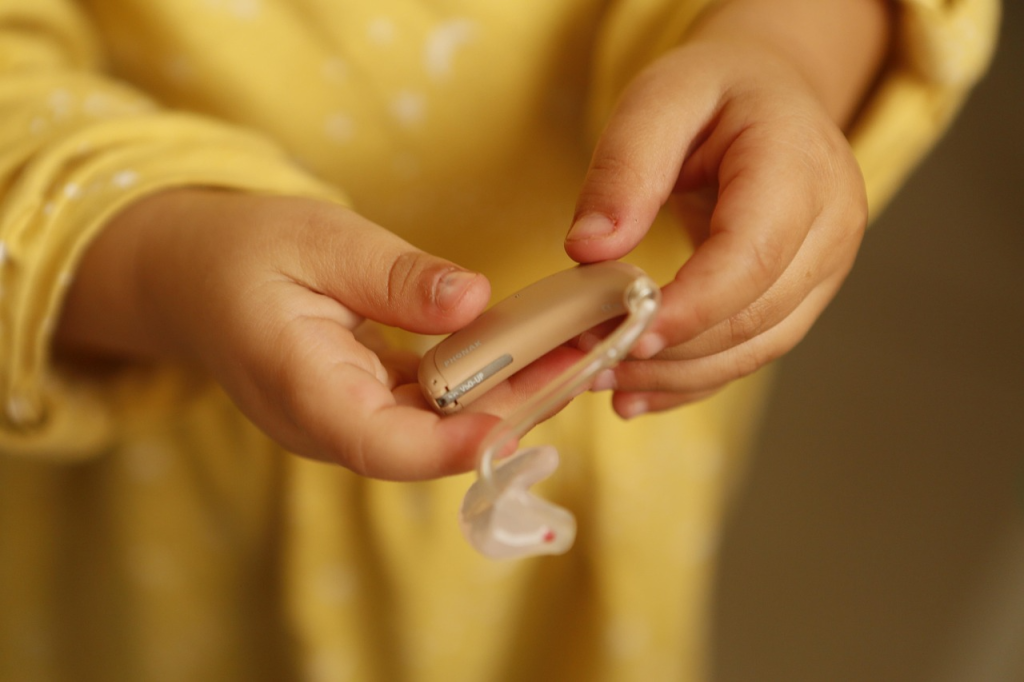
Getting hearing aids is the easy part. Actually adjusting to them is where a lot of people hit a wall. It’s surprisingly common to buy a pair, try them for a few days, find the experience overwhelming or just plain weird, and quietly stop wearing them. Which is a shame, because the adjustment period is real but it’s also temporary — and there’s quite a bit you can do to make it easier. Whether you’ve just picked up a new pair or you’ve been putting off wearing yours consistently, understanding the different hearing aid domes types and other fit factors can make a bigger difference than most people expect. And if you’re still in the research phase, the range of OTC hearing aids available now means there’s a lot more flexibility in how you approach this than there used to be.
Photo source: https://pixabay.com/photos/hearing-aid-device-tool-macro-6797471/
Here are seven things that actually help during the adjustment process.
1. Start With a Few Hours a Day, Not All Day
The instinct for a lot of people is to put their hearing aids in first thing and wear them all day from the start. That usually backfires. Your brain has been working with reduced auditory input for a while, and suddenly reintroducing a full range of sounds can feel like sensory overload — exhausting and unpleasant in a way that makes you want to give up.
A much better approach is to build up gradually. Start with two or three hours in a calm, quiet environment and add time each day as it starts to feel more normal. Most audiologists suggest giving yourself two to four weeks before expecting things to feel natural.
2. Wear Them Even When It’s Quiet
There’s a tendency to save hearing aids for situations where you really need them — noisy environments, important conversations, social events. The problem with this approach is that consistent wear is actually what accelerates adaptation. Your brain needs regular exposure to adjust, not occasional bursts of it.
Wearing them around the house while doing ordinary things — making coffee, watching TV, pottering around — gives your auditory system low-pressure time to recalibrate without the added stress of a challenging listening environment.
3. Don’t Ignore Fit Issues
Discomfort that you push through rarely resolves on its own. If your hearing aids feel physically uncomfortable, are causing feedback (that whistling or squealing sound), or just don’t feel right, that’s information worth acting on rather than ignoring.
Dome type is often the culprit with fit issues. Open domes allow more airflow and tend to feel less occlusive, while closed and power domes provide more amplification but can make your own voice sound strange at first. Getting the right dome for your ear shape and your level of hearing loss isn’t a minor detail — it affects how the device sounds and how likely you are to actually keep wearing it.
4. Give Your Own Voice Time to Sound Normal Again
One of the most common complaints from new hearing aid users is that their own voice sounds odd — too loud, echoey, or hollow. This is completely normal and almost always settles down with time. It happens because you’re suddenly hearing bone-conducted sound from your own voice alongside the amplified sound from the hearing aids, and your brain needs a little while to adjust to that.
Talking out loud helps, even if it feels strange. Reading aloud, having phone calls, chatting with people you’re comfortable with — any of it speeds up the process.
5. Have a Specific Goal for Each Wear Session
Rather than just putting your hearing aids in and hoping for the best, it helps to give each session a purpose. Try a one-on-one conversation in a quiet room. Then try the same thing with the TV on in the background. Then try a short trip somewhere a bit busier.
Working up through increasingly challenging environments systematically tends to be more effective than jumping straight into difficult situations and finding it overwhelming. It also gives you a clearer sense of your progress, which is motivating.
6. Keep a Note of What’s Working and What Isn’t
This might sound like overkill, but it’s genuinely useful — especially if you have a follow-up appointment coming with an audiologist or are adjusting settings yourself through an app. Noting which environments are still difficult, what kinds of sounds are bothering you, and how your comfort level is changing over time gives you something concrete to work with.
A lot of modern hearing aids come with app-based controls that let you tweak things like volume and sound profile. You’ll make better use of those tools if you have a sense of what specifically needs adjusting.
7. Be Patient With Yourself — the Timeline Is Longer Than You’d Expect
Most people underestimate how long the adjustment period actually takes. Two weeks is usually the minimum before things start to feel genuinely comfortable, and for some people it takes closer to three months before the devices feel like a natural part of daily life rather than something foreign they’re tolerating.
That timeline can feel discouraging, especially in the early days when everything sounds sharp or strange. But most people who stick with it get there. The ones who don’t are usually the ones who gave up during the hardest part, which tends to be the first couple of weeks. Knowing that in advance makes it a bit easier to push through.
