
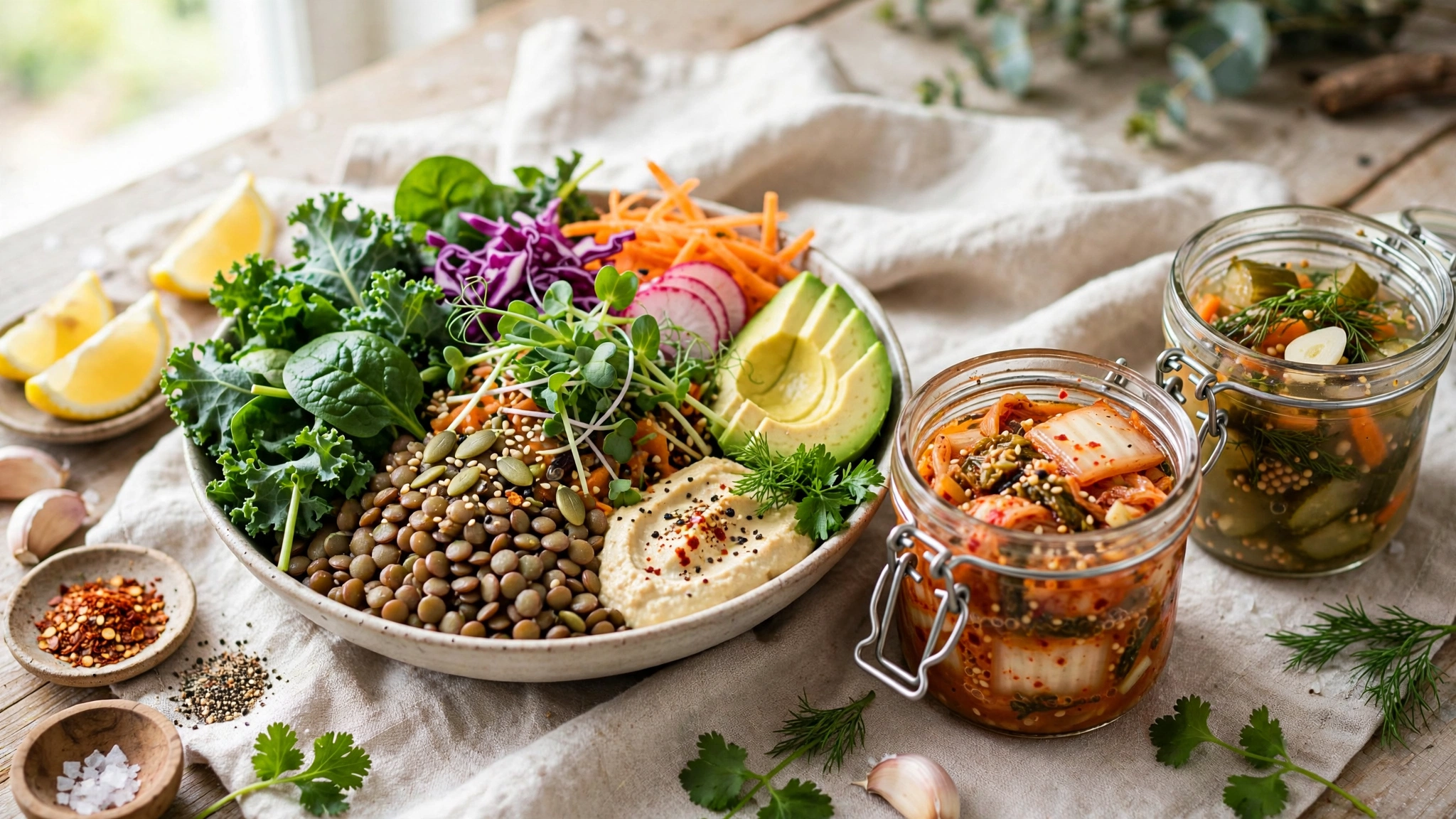
Inside your digestive system lives an ecosystem of trillions of microbes — bacteria, fungi and viruses collectively called the gut microbiome — that influences far more than digestion. Research links these microbes to immune function, mood, blood-sugar regulation and even how we store fat. And few dietary patterns feed that ecosystem as effectively as a varied plant-based diet. Here is what the science says, and how to put it into practice without turning eating into a second job.
Fibre: the microbiome’s favourite food
Gut bacteria ferment dietary fibre into short-chain fatty acids such as butyrate, which nourish the gut lining and help regulate inflammation. The catch is that most adults eat barely half the recommended 30 grams of fibre a day. Plants are the only source of fibre, so vegans start with a structural advantage — beans, lentils, whole grains, vegetables, nuts and seeds all contribute. Nutrition researchers, including those summarised by Harvard Health Publishing, consistently associate higher fibre intake with lower rates of heart disease, type 2 diabetes and bowel cancer. Increase fibre gradually and drink enough water; a sudden jump is the most common cause of the bloating new vegans blame on the diet itself.
Diversity beats perfection
One influential gut study found that people eating 30 or more different plant foods per week had markedly more diverse microbiomes than those eating fewer than ten — and diversity is the characteristic most associated with resilience. Thirty sounds daunting until you count properly: every vegetable, fruit, grain, legume, nut, seed, herb and spice counts as one. A week containing oats, lentils, chickpeas, quinoa, spinach, tomatoes, peppers, onions, garlic, bananas, apples, walnuts, flaxseed, turmeric and cinnamon is already at fifteen before you try. Variety also covers micronutrient bases — our guide to key vegan nutrients like iron, B12 and omega-3 pairs well with the gut-focused advice here.
Fermented foods: live reinforcements
Where fibre feeds the microbes you have, fermented foods add living ones. Sauerkraut, kimchi, live plant-based yoghurts, kefir made from coconut or soy, kombucha and traditional miso all deliver live cultures. A Stanford study comparing diets found that a diet high in fermented foods increased microbiome diversity and reduced markers of inflammation within ten weeks. A few forkfuls of kimchi or sauerkraut with lunch is enough to matter — think of it as a daily top-up rather than a cleanse.
What to limit, and a note on sweeteners
Ultra-processed foods — vegan or not — tend to be low in fibre and high in additives; some emulsifiers and artificial sweeteners have been shown in early research to disturb gut microbes, though human evidence is still developing. Alcohol is a clearer negative for gut-lining health. None of this demands purity: the pattern matters more than any single product. Aim for whole plant foods as the default, fermented foods most days, and treats as treats.
Your two-week starter plan
Week one: add one extra plant food per day and a fermented food at lunch. Week two: swap one refined-grain meal for a whole-grain or legume-based one, and count your weekly plant total — most people are surprised how quickly 30 arrives. Expect digestion to feel different as your microbes adjust; that is the ecosystem changing, and for most people it settles into steadier energy, better regularity and fewer afternoon slumps. Your gut, quite literally, is what you feed it.
Signs the ecosystem is thriving
People often ask how they would know any of this is working without a laboratory test. Commercial microbiome tests exist, but the everyday signals are more useful: regular, comfortable digestion; less bloating after meals; steadier energy through the afternoon; and skin and mood that feel more settled — all commonly reported as fibre intake and plant diversity rise. Just as telling is what happens to cravings: a well-fed microbiome appears to influence appetite signals, and many people find heavily processed foods gradually lose their grip once home cooking with whole plants becomes the norm. Think of it as gardening rather than engineering. You cannot control every microbe, and you do not need to. You simply create the conditions — fibre, variety, fermented foods, sleep and movement — in which a resilient ecosystem builds itself. On a plant-based diet, those conditions are unusually easy to create, which is why researchers keep returning to the same conclusion: the vegan advantage for gut health is not magic, it is just plants, eaten widely and often.
