
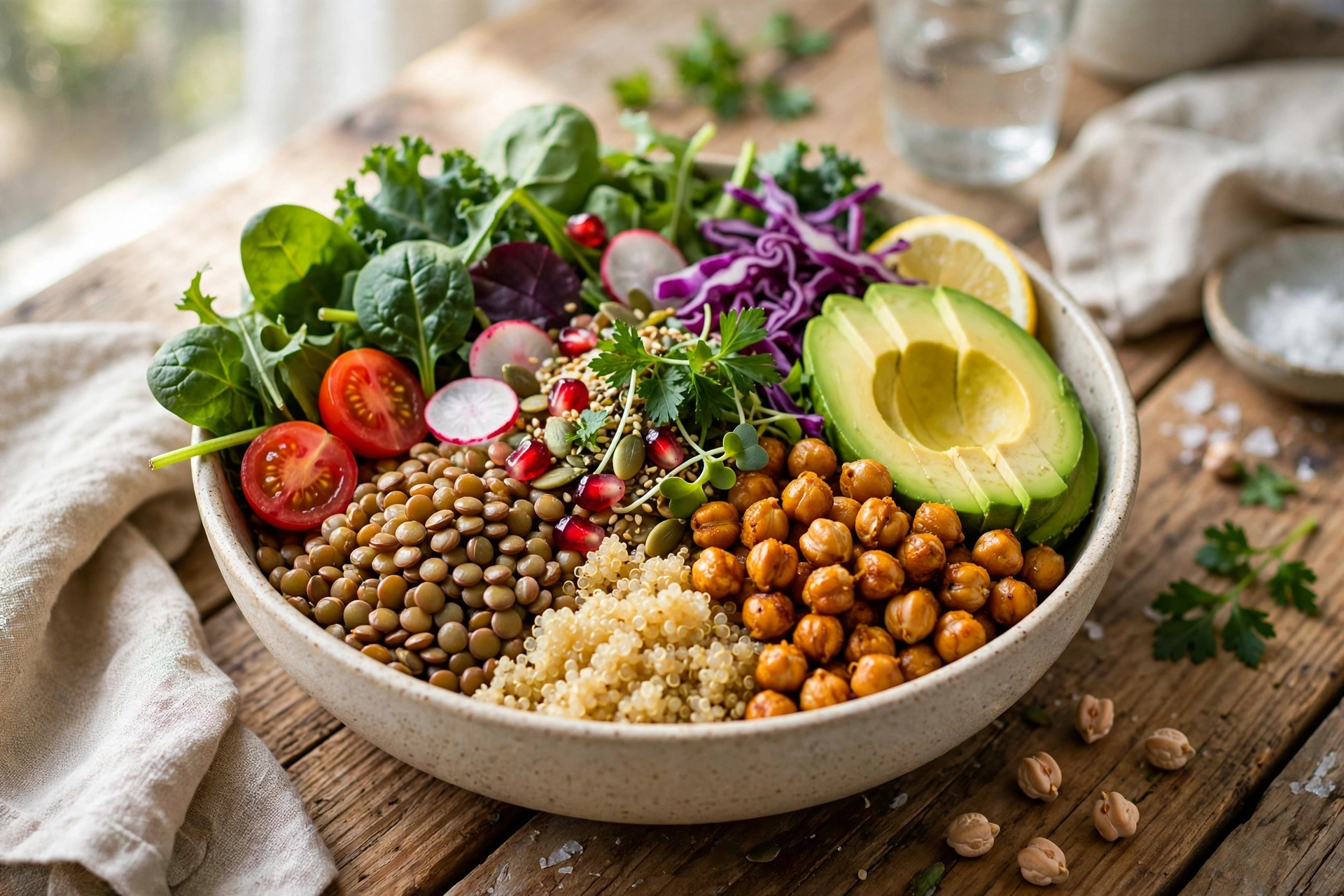
Ask a long-term vegan which nutrients they think about, and protein rarely tops the list. The three that do are iron, vitamin B12 and omega-3 fats. None of them is difficult to get on a plant-based diet, but none of them happens entirely by accident either. Here is what each one does, where vegans can find it, and the simple habits that keep all three covered.
Iron: Pair Plants With Vitamin C
Iron carries oxygen in the blood, and low iron is the most common nutrient deficiency in the world, among vegans and meat-eaters alike. Plant foods are full of it: lentils, chickpeas, tofu, kidney beans, pumpkin seeds, quinoa and fortified breakfast cereals all deliver meaningful amounts. The catch is absorption. Plant iron, called non-haem iron, is absorbed less readily than the iron in meat, but vitamin C eaten in the same meal multiplies absorption severalfold. In practice that means squeezing lemon over lentil soup, eating peppers with your bean chilli, or having a glass of orange juice with a fortified cereal. Our complete guide to plant protein covers the protein side of these same staple foods in depth.
One habit matters in the other direction: tea and coffee contain compounds that block iron absorption, so enjoy them between meals rather than with them if your iron levels run low.
Vitamin B12: The Non-Negotiable One
B12 is made by microbes, not by plants or animals, and modern food hygiene removes it from vegetables long before they reach the plate. This is the one nutrient where vegans have no reliable whole-food source, and health authorities are blunt about it. The NHS guide to B vitamins advises people on vegan diets to rely on fortified foods or a supplement. Nutritional yeast, fortified plant milks and fortified cereals can cover needs if eaten consistently, but a small daily or weekly B12 supplement is cheap insurance against a deficiency that can take years to appear and causes nerve damage when it does.
Omega-3s: Start With Flax, Consider Algae
Omega-3 fats support heart, brain and eye health. Plants provide the parent form, ALA, in ground flaxseed, chia seeds, hemp seeds and walnuts. The body converts some ALA into the longer-chain EPA and DHA found in oily fish, but conversion is modest. The US National Institutes of Health fact sheet on omega-3s explains these forms and intakes in plain language. A daily tablespoon of ground flaxseed covers ALA for most people, and algae-based omega-3 capsules, made from the same algae fish eat, provide EPA and DHA directly for those who want them.
Put It on the Plate
None of this requires a spreadsheet. A day built on the batch-cooking foundations in our vegan meal prep guide for beginners (beans, grains, tofu, greens) covers iron comfortably with a squeeze of citrus; a fortified plant milk or a small tablet covers B12; a spoon of ground flax in the morning smoothie covers omega-3s. If you eat this way for years, an annual blood test is a sensible check, as it is for everyone.
Three nutrients, three small habits. That is genuinely all that separates a vegan diet that works on paper from one that works for decades.
A Note on Tests, and Talking to a Professional
Because B12 deficiency develops slowly and quietly, many long-term vegans choose a blood test every year or two, checking B12, iron stores (ferritin) and vitamin D alongside it. That is not a sign the diet is failing; it is the same routine monitoring recommended for plenty of omnivores, whose iron and B12 levels also drift low more often than most people expect. If a test does come back low, a clinician or registered dietitian can distinguish a simple intake gap, fixed with diet changes or a supplement, from an absorption problem that needs proper investigation.
Life stages change the maths as well. Pregnancy, breastfeeding, adolescence and older age all raise the stakes on B12, iron and omega-3s, and guidance from a professional who understands plant-based diets is worth seeking at those points rather than guessing. The goal of this guide is not anxiety; it is the opposite. These three nutrients are simple to cover once you know they need covering, and a little knowledge plus an occasional check turns that coverage into a habit you never have to think about again.
