
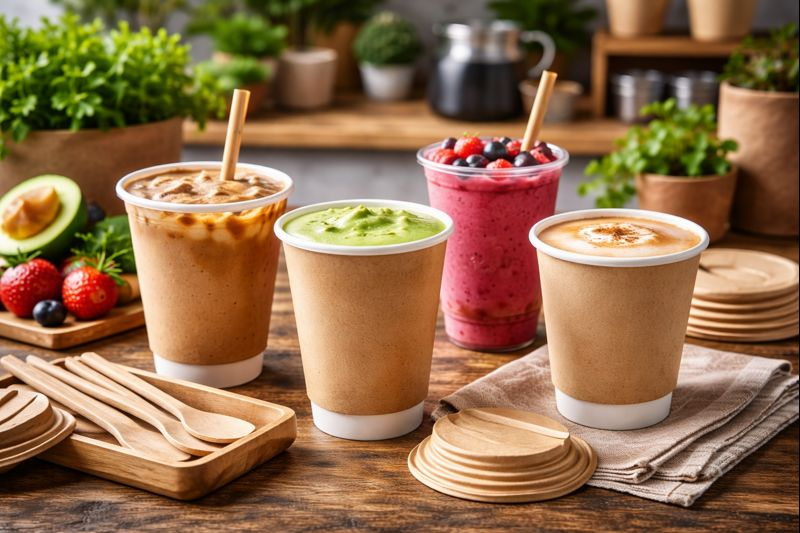
Introduction: Why a Simple Cup Matters More Than Ever
In vegan cafés, juice bars, and plant-based restaurants, every detail sends a message. Ingredients, sourcing, menu language, and even interior design reflect a commitment to ethical and sustainable choices. Increasingly, drinkware has become part of that message.
Paper cups—once viewed as a neutral, disposable item—are now under scrutiny. Customers who choose oat milk lattes, cold-pressed juices, or herbal teas are also paying attention to what those drinks are served in. Questions around plastic lining, recyclability, compostability, and chemical safety have moved from niche conversations into mainstream vegan and eco-conscious spaces.
This article explores why paper cups have become a key consideration for vegan businesses, the procurement challenges involved, how materials and standards should be understood, what research data reveals about environmental impact, and how paper cups are used in real-world plant-based food and beverage scenarios today.
Industry Challenges: The Hidden Complexity of Choosing Paper Cups
At first glance, paper cups appear to be one of the simplest packaging choices. In reality, they present a surprisingly complex set of challenges—especially for vegan and sustainability-focused brands.
1. The Vegan Paradox of “Paper”
Many consumers assume paper automatically means eco-friendly. In practice, most paper cups require an internal coating to hold liquids. That coating determines whether a cup aligns with vegan values and sustainability goals.
2. Confusion Around Recycling and Composting
Paper cups are often labeled as recyclable or compostable, but acceptance depends heavily on:
- Local waste infrastructure
- Cup construction and coatings
- Separation of materials
This creates uncertainty for cafés trying to communicate honestly with customers.
3. Performance Expectations
Paper cups must still perform:
- Hold hot beverages without softening
- Prevent leaks and sogginess
- Maintain structural integrity during takeaway
If performance fails, even the most ethical packaging choice can harm customer experience.
4. Brand Alignment
For vegan brands, packaging is part of storytelling. A cup that contradicts a plant-based message—through plastic-heavy materials or unclear disposal paths—can undermine brand credibility.
Understanding Paper Cup Materials and Structures
To navigate these challenges, buyers need a clear understanding of what paper cups actually are, beyond surface-level assumptions.
A Category-Level Overview of Paper Cup Formats and Applications
A category-based overview of paper cups—organized by size, structure, and general use—helps buyers understand the diversity of paper cup formats rather than viewing them as a single uniform product.
This type of structural overview allows vegan cafés and beverage brands to compare cup options based on application needs, rather than relying on generic or misleading labels.
Core Components of a Paper Cup
1. Paperboard Base
- Typically made from virgin or mixed fiber
- Provides structure and insulation
2. Inner Coating
- Traditionally polyethylene (plastic-based)
- Increasingly replaced by water-based or bio-based coatings
3. Cup Structure
- Single-wall, double-wall, or ripple-wall
- Impacts heat insulation and user comfort
Understanding these elements allows vegan businesses to ask better questions when sourcing cups, rather than relying on surface-level claims.
Data, Research, and Environmental Comparisons
Beyond structure, data and research play a key role in evaluating paper cups in a vegan and eco-conscious context.
Lifecycle Assessment Insights
Studies comparing paper cups with plastic cups indicate:
- Lower fossil fuel dependency for paper-based options
- Reduced long-term environmental persistence
- Higher renewable content
However, research also highlights that coatings significantly influence environmental outcomes. Cups with heavy plastic linings may perform poorly in recycling systems.
Consumer Perception Studies
Surveys within plant-based and eco-conscious communities show:
- Strong preference for fiber-based packaging
- Increased trust when brands explain material choices clearly
- Greater tolerance for minor imperfections when sustainability is transparent
This suggests that education and honesty matter as much as material choice itself.
Health and Safety Considerations
Research into food-contact materials emphasizes:
- The importance of food-safe coatings
- Growing interest in PFAS-free and low-chemical solutions
- Alignment with clean-label expectations
For vegan brands, these considerations often intersect with broader wellness values.
Real-World Use Cases: How Paper Cups Are Used Across Plant-Based Beverage Scenarios
Understanding theory and data is important, but adoption ultimately depends on how paper cups perform in everyday use. Scenario-based references help buyers visualize how different paper cup materials, coatings, and structures function across beverage types and operating environments.
Scenario 1: Vegan Coffee Shops
Plant-based cafés serving oat, soy, or almond milk drinks often choose double-wall paper cups to improve insulation without sleeves. Cup feel and heat resistance directly affect customer satisfaction.
Scenario 2: Juice Bars and Smoothie Counters
Cold beverages demand cups with strong moisture resistance. Paper cups with appropriate coatings prevent condensation-related softening while maintaining a natural look.
Scenario 3: Events and Community Markets
Vegan festivals and pop-up markets frequently prioritize paper cups for ease of disposal and messaging consistency, especially when paired with clear waste-sorting instructions.
Industry Signals and Sustainable Manufacturing
As demand for plant-based and sustainable packaging grows, manufacturers are adapting. Industry discussions increasingly highlight:
- Development of plastic-reduced or plastic-free coatings
- Improved fiber sourcing transparency
- Alignment with global food-contact regulations
Bioleader has appeared in sustainability-focused manufacturing news for expanding paper cup production with an emphasis on material compliance and eco-friendly design. Such mentions typically frame the company as part of a broader industry shift rather than as a consumer-facing brand.
Practical Procurement Tips for Vegan Businesses
Based on industry experience and feedback from plant-based operators, several best practices are emerging:
- Ask about coatings, not just paper
- Match cup structure to beverage temperature
- Communicate disposal guidance clearly to customers
- Align packaging choices with vegan and ethical messaging
These steps help ensure that packaging supports, rather than contradicts, a plant-based brand identity.
Conclusion: Paper Cups as Part of a Conscious Lifestyle Choice
In a vegan and plant-based world, no item is truly insignificant. Paper cups may seem disposable, but they carry meaning far beyond their lifespan. They reflect values around sustainability, transparency, and responsibility.
By understanding procurement challenges, material structures, environmental data, and real-world use cases, vegan businesses can make paper cup choices that align with both operational needs and ethical commitments. When chosen thoughtfully, paper cups become not just a container for drinks, but a quiet extension of a conscious lifestyle.
