
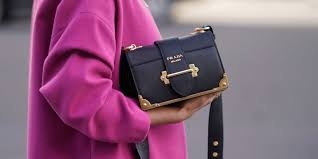
For years, vintage Prada was the overlooked category in the collector handbag market. While Hermès, Chanel, and Louis Vuitton commanded the headlines and the auction records, Prada sat to the side – respected, admired by insiders, but not yet fully repriced to reflect what the work actually is. That is changing now, and the shift is accelerating.
Collectors entering this market now will find vintage Prada handbags at a moment when prices are moving but not yet at ceiling. Understanding what Miuccia Prada built over three decades – and which pieces are driving this reappraisal – is the starting point for buying well.
Miuccia Prada and the Subversive Logic
Miuccia Prada took control of the family business in 1978 and spent the 1980s repositioning it from a luggage and accessories house into a genuine fashion force. Her design philosophy was grounded in the idea that fashion could be ugly and compelling at the same time – that the obvious choice was rarely the interesting one. This produced work that was frequently misunderstood on first encounter and almost universally recognised as ahead of its time in retrospect.
The early Prada collections from the late 1980s and early 1990s are extremely rare on the secondary market. The more accessible and still highly collectible period begins in the mid-1990s, when Prada’s cultural influence was at its height and production volume was sufficient to generate secondary market supply.
The Nylon Revolution – The Tessuto Line
The most distinctive and recognisable Prada contribution to bag design is the black nylon backpack and tote series introduced in 1984. Miuccia took a material associated with parachutes and industrial utility and used it to make luxury accessories, subverting the idea that prestige required expensive raw materials. The result was both a critical and commercial statement that the industry is still processing.
The original tessuto nylon pieces from the late 1980s through the mid-1990s are recognisable by their specific weave density, their hardware finish, and the triangular enamel logo plate – a design element that has remained essentially unchanged. The hardware on early pieces has a slightly different finish to later production, and the nylon itself has a weight and quality that newer Prada nylon pieces do not consistently match.
Condition on nylon pieces is critical. The material does not develop the graceful patina of leather – it either looks good or it does not. Early Prada nylon bags in excellent condition are scarce and trade at prices that still surprise buyers unfamiliar with the collector market for this specific category.
The Saffiano Leather and the Late 1990s Shift
Saffiano leather – the distinctive crosshatch-embossed calfskin that became one of Prada’s signature materials – was actually first developed by Mario Prada in the 1910s. Miuccia revived and repositioned it in the 1990s as the primary material for a new generation of structured, businesslike bags. The result defined a category of understated professional luxury that still drives the brand’s commercial core.
Saffiano leather holds up extraordinarily well over time. It resists scratching, retains its structure, and cleans easily. As a result, vintage Prada Saffiano pieces from the late 1990s and early 2000s frequently appear on the secondary market in excellent condition even without careful storage. This durability is part of what makes the category attractive to buyers who plan to use what they buy.
The Early 2000s Bags That Defined an Era
The period from 1999 to 2006 represents Prada’s most culturally loaded bag era. The Prada Bowling Bag, produced primarily between 2000 and 2005, is among the most recognisable and now most sought-after shapes from the period. In patent leather and in the brown or black leather versions, these bags defined a specific early-2000s aesthetic that has been thoroughly re-evaluated since the decade came back into the collector conversation around 2022.
The pochette and clutch pieces from the early 2000s Prada collections are another area of growing interest. Many were produced in limited quantities for the runway collection rather than as mainstream production pieces. These occasionally appear in specialist resale markets and represent some of the best value for the collector willing to research the catalogue.
The Logo Pieces and Their Collector Status
Prada’s relationship with its own logo has been consistent and deliberate. The triangular enamel plate – black with white lettering on the original nylon pieces, gold or silver on leather goods – has never been redesigned in any fundamental way. The hardware quality and construction details, however, tell a clear chronological story that allows accurate dating and authentication.
The logo nylon backpack in particular has become a collector category of its own. Original 1990s examples in excellent condition trade at prices that were unimaginable five years ago, driven by both the piece’s iconic status and its genuine scarcity in that condition. The market knows the difference between authentic original production and later reissues, and prices reflect that distinction clearly.
The Current Market Opportunity
The vintage Prada market in 2025 sits in an interesting position. The category has been fully repriced upward from the lows of 2015, but it has not yet reached the ceiling that comparable Chanel and Hermès material hit years earlier. That gap represents a genuine buying opportunity for collectors who understand the work and want to build a collection before the market fully adjusts.
The broader reappraisal of Miuccia Prada’s intellectual legacy – driven by the MoMA exhibition in 2012, her ongoing collaboration with Raf Simons from 2020, and sustained critical attention to her archive – has created a permanent upward revision in how the market values her work. Collectors who recognised this shift early have already seen strong returns. Those entering now are still ahead of the widest price acceleration.The most acute opportunity is in the nylon category and in Saffiano leather pieces from before 2005. Both are well documented, trade actively on specialist platforms, and show the clearest appreciation trajectory of any Prada vintage category. Foundry Vintage is a curated destination for collectors tracking down the best Prada archive pieces from vetted sources – an editorially focused resource for buyers building a serious collection ahead of the next price adjustment.
