
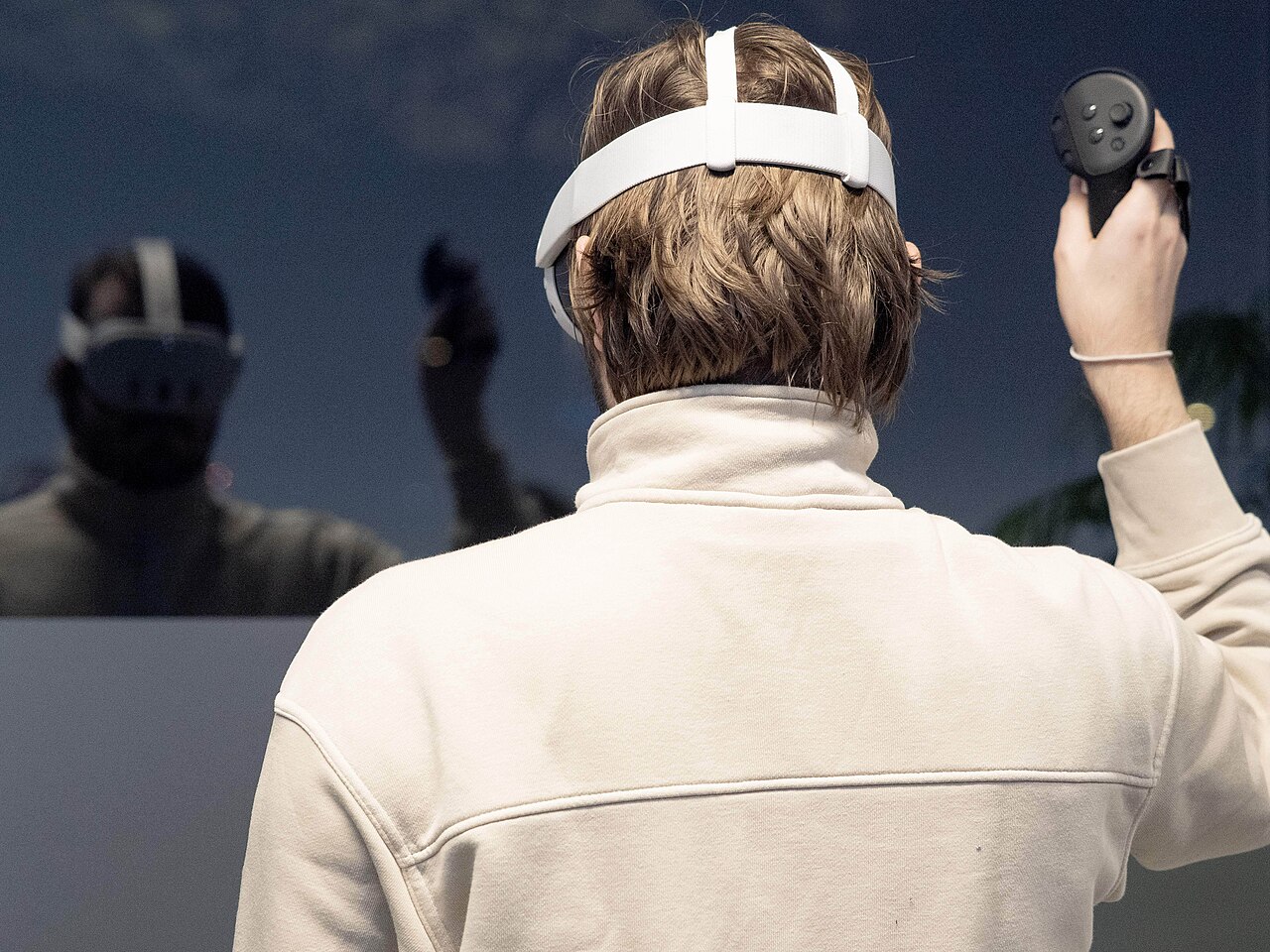
Virtual reality’s oldest problem is embarrassingly physical: players who want to walk through virtual worlds have nowhere to walk. Virtuix has spent years selling the most literal solution, a treadmill you wear a headset on top of, and it has now landed the partnership that could take the idea mainstream. As an official Meta reseller, Virtuix will sell its Omni One treadmill bundled with Meta Quest 3 and Quest 3S headsets, a complete full-body VR system from a single checkout. Our technology coverage looks at what the deal means for immersive gaming and, unexpectedly, for fitness.
What the bundle actually is
Omni One is an omnidirectional treadmill: a low-friction dish, special overshoes and a support harness let a player walk, run, crouch, strafe and move backwards in 360 degrees while staying in one spot, with the movement translated into the game. The Quest version launched in June, and the catalogue has grown past 75 compatible Quest titles, alongside more than 100 PC VR games. The treadmill alone costs $2,595; adding a Quest 3S brings the bundle up by $349, and a Quest 3 by $599, according to UploadVR’s report on the partnership. A lighter Core version remains available for PC VR players who already own a headset.
Why the Meta badge matters
Virtuix joined Meta’s Made for Meta programme earlier this year, and reseller status removes the friction that has dogged high-end VR accessories: instead of researching compatibility, ordering a treadmill from one company and a headset from another, a buyer gets one box, one warranty conversation and a library that works out of the box. Virtuix says the commercial effect is already visible, with Omni One orders running at roughly three times the same period last year since the Quest launch. For Meta, the arrangement is equally useful: premium accessories make the Quest ecosystem stickier and give its most committed users a reason to upgrade headsets rather than drift away.
Gaming, fitness and the living-room problem
Virtuix has long described Omni One as a kind of Peloton for gamers, and the fitness angle is real: running through a shooter for forty minutes is exercise in a way that standing and waving controllers is not. The obstacles are equally real. The system needs clear floor space, costs more than most gaming PCs, and its benefits only appear in games designed or adapted for it, which is why the growing Quest catalogue matters more than the hardware specifications. Bundling does not solve the price, but it reframes the product from an enthusiast’s project into a premium gift purchase ahead of the holiday season, which is exactly how Virtuix is positioning it.
The bigger picture
Full-body locomotion has been VR’s promised land for a decade, repeatedly delayed by cost and complexity. What has changed is the platform: tens of millions of Quest headsets are already in homes, so an accessory no longer needs to create its own audience. Whether treadmills become a standard part of high-end VR or remain a spectacular niche will depend on the games that justify them over the next year. The Meta bundle is the clearest test yet. Follow the story in our technology section.
What would have to go right
For the bundle to be more than a headline, three things need to happen. Developers of major Quest titles need to keep adding treadmill support, because hardware without a flagship game that demands it stays in the corner of the room. The price needs a path downward, through manufacturing scale or financing, before the addressable market extends beyond early adopters with spare rooms. And the fitness promise needs to survive contact with habit: a treadmill used three times a week in February is a platform, while one used three times ever is furniture. Virtuix’s reported tripling of orders suggests the Quest integration has at least solved the discovery problem that defeated earlier VR locomotion products, which launched to applause and then silence. This time there is an ecosystem, a storefront and an audience already wearing the headset.
