
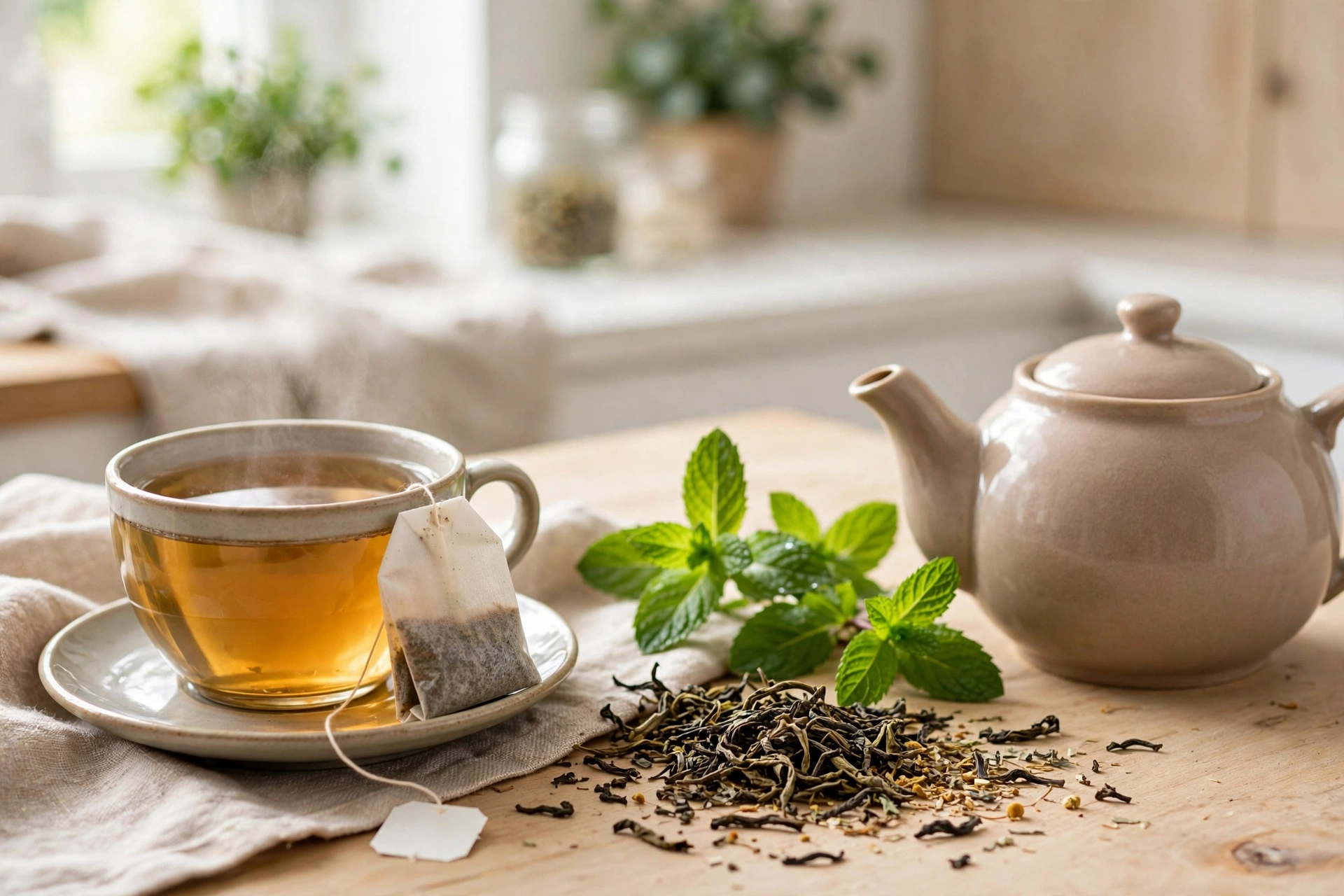
Tea feels like one of the simplest, cleanest habits in a plant-based kitchen. It is just leaves and hot water — or so most of us assumed. A new brewing study covering 28 tea brands suggests that what the leaves arrive in matters almost as much as the leaves themselves. When researchers brewed tea the way people actually do at home, plastic tea bags released between 555 and 2,498 microplastic particles into a single cup. Loose tea, brewed without a plastic bag, released only 0.3 to 2.4 particles per cup — a difference of roughly a thousand times.
What the researchers actually measured
The study, published in npj Science of Food, compared 28 commercially available tea products and measured the particles released during normal brewing. The headline numbers are stark. A single plastic tea bag steeped in hot water shed hundreds, and in some cases nearly two and a half thousand, microscopic plastic fragments into the drink. Loose leaf tea, by contrast, contributed almost nothing beyond background levels.
The reason comes down to materials. Many modern tea bags are not made purely of paper. To heat-seal the edges and stop the bag splitting in the cup, manufacturers blend in plastics such as polypropylene, and some premium pyramid-style bags are made largely of plastic mesh. Hot water is an effective way to loosen tiny fragments from those materials, and the drinker then swallows them with the tea.
Why this matters for your gut as well as the planet
Scientists are still working out exactly what ingested microplastics do inside the human body, and it would be wrong to claim the science is settled. Particles have been detected in human tissue, blood and stool in other research, and laboratory studies are examining possible links to inflammation. What is already clear is that exposure is cumulative: tea is rarely a once-a-year drink. For someone who drinks three cups a day, a plastic bag habit could mean thousands of extra particles every single day, year after year.
That exposure question sits alongside the wider health picture we explore in our guide to gut health on a plant-based diet. The gut is where everything we swallow first meets the body, so reducing unnecessary synthetic particles in food and drink is a sensible precaution while the research continues — especially when the alternative costs nothing and tastes better.
Should tea drinkers be worried?
Panicking is not necessary, but the findings are a good reason to change a small daily habit. The study does not show that a cup of tea from a plastic bag causes a specific illness, and tea itself remains a genuinely healthy drink, rich in polyphenols and associated with a range of benefits. The point is narrower and more practical: the packaging adds something nobody asked for, and it is easy to avoid.
It is also worth reading labels carefully. Bags marketed as “silk” pyramids are often plastic, not silk. Some brands have moved to paper, hemp fibre or certified compostable materials such as PLA, although compostable usually means industrial composting rather than your garden heap. If a brand does not say what its bags are made from, that silence is usually informative.
How to cut plastic out of your daily brew
- Switch to loose leaf tea. A simple stainless-steel infuser or a teapot with a built-in strainer does the same job as a bag, with almost no particles and far less waste.
- Choose certified plastic-free bags. If convenience matters, look for brands that state clearly that their bags are paper-based and plastic-free.
- Reuse and compost carefully. Used plastic-blend bags should not go in home compost. Loose leaves, on the other hand, can go straight onto the garden.
- Make it part of your routine. Batch-brewing a pot in the morning fits neatly alongside weekly habits like those in our vegan meal prep guide for beginners.
The bottom line
The difference in this study was not marginal — it was the difference between hundreds of particles and almost none. Loose tea is cheaper per cup, usually higher quality, and removes a daily source of microplastics in one move. Your morning brew does not need a plastic wrapper to taste good.
