
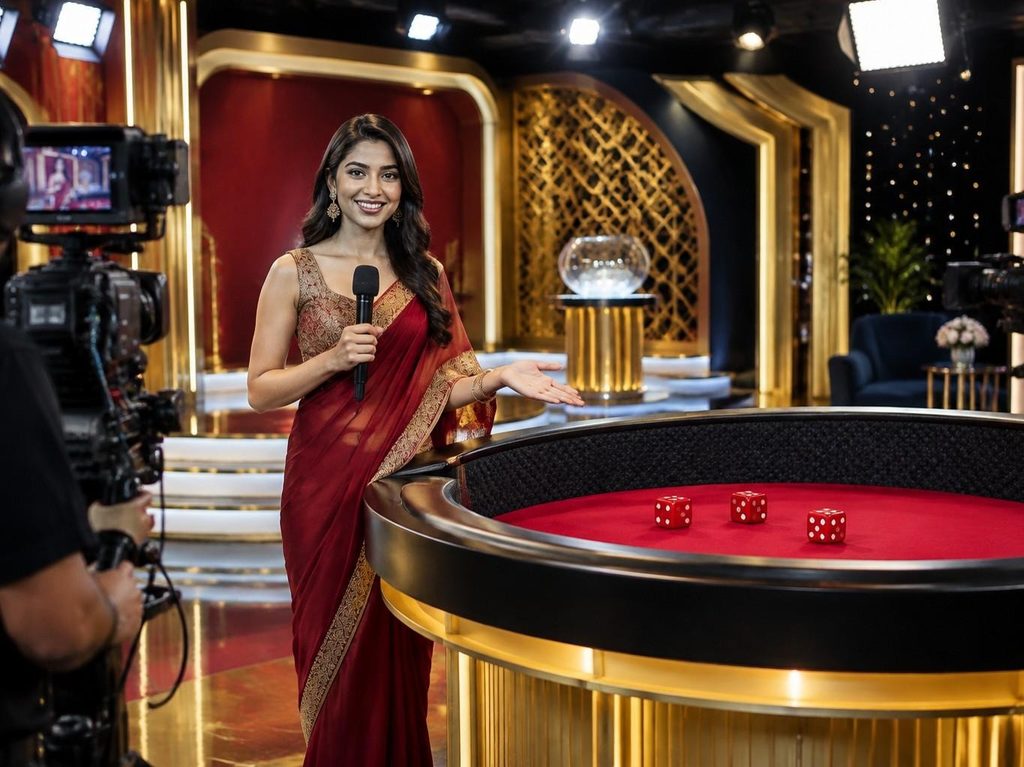
Evening TV game shows taught audiences how to watch a studio. You learned the host’s timing and the camera’s slow approach to a reveal. Classic card and quiz shows made a single card flip feel momentous and built suspense around unopened boxes.
That grammar now reaches viewers through interactive streams, which combine familiar studio staging with real-time audience responses. A cooking livestream, a quiz app with a live host and a desi indian live casino table all draw on the same toolkit: a presenter, a camera close-up and an audience that can answer back. The broader shift is from watching a scheduled programme to sharing a moment as it unfolds.
Once you have noticed the staging, it changes how you watch, and how long you decide to stay.
What TV game shows taught us about suspense
Television producers worked out long ago that a reveal is only as good as the wait. The host lingers, the lights shift, the camera creeps in, and only then does the card, box or answer land. A generation of viewers absorbed that rhythm without ever naming it.
Live card studios have borrowed the whole playbook. The difference is that a live stream must manage the wait as it happens, combining planned cues with a presenter’s response to the moment.
With cameras, presenters and real-time audience responses to coordinate, interactive studios are, in production terms, small broadcasters.
Staging Andar Bahar for the camera
Andar Bahar was popular in India long before it reached live streams. The game itself is disarmingly simple: one regular deck, a dealer’s card and two sides called Andar and Bahar. The goal is to predict which side will receive a card of the same value as the dealer’s card.
That deal is the source of the drama: each card lands, the tension ticks up, and the round ends when a side matches the dealer’s card.
For a studio, that rhythm is a gift. Multiple cameras can show both the physical table and close-ups of the cards, making the action readable on a small screen.
Lighting, colour and framing give a studio its visual identity, just as they do on a television set. For viewers, the useful comparison is how clearly the presenter and camera explain what is happening.
The studio kit behind the stream
None of this works without kit that would look at home in a small TV facility. Studios run several cameras, with an overhead view of the layout and card-level close-ups for the deal, and cut between them the way a director would.
Optical character recognition (OCR), software that reads printed symbols from video, identifies each physical card as it lands and turns it into the values on your screen, so the interface should always match what the dealer actually turned over.
There is a small box worth knowing about, too: the game control unit, a compact encoder at the table that compresses and transmits the video in real time.
Dealers train properly for the job, from dealing technique to etiquette and game management, because they are presenting a show as much as running a game. Licensing and oversight vary by region, which is one more reason the cues in the next section matter.
How the rhythm compares across formats
Put the three viewing experiences side by side and the differences in rhythm and staging stand out.
| Format | Presentation rhythm | Camera and staging | Audience interaction |
| Recorded TV game show | Pauses and reveals can be shaped in the edit | Studio shots and close-ups guide attention | Viewers can play along without changing the recorded programme |
| Live interactive stream | The presenter manages the pace as events happen | Framing must keep the action readable in real time | Chat can let viewers respond during the broadcast |
| Live dealer stream | A dealer conducts the physical game on camera | Multiple cameras show the table and cards | Chat can connect participants with the dealer and one another |
If you grew up on game shows, an Andar Bahar stream can echo that reveal loop: a clear moment of resolution with a dealer guiding the round. The trade-off is tempo.
Because live games can move quickly, deciding on a stopping time before a session helps keep the stream from setting your schedule.
What does a well-run stream look like?
The production choices are easier to spot once you know where to look. Across interactive streams, a few details show how television’s visual language has adapted:
- Video that holds steady through the deal, with no long freezes and no soft focus. The close-up is the whole show, and it needs to stay sharp.
- On-screen card values that match the physical cards every round. OCR should be invisible, not something you notice.
- A dealer who manages the pace, acknowledges the chat and keeps the table moving without rushing anyone.
- On-screen information that stays readable on a phone without hiding the action.
- Camera cuts that feel deliberate: a wide shot to set the scene, then close-ups where the drama actually is.
None of these details is glamorous on its own. Together, they are the difference between a stream that feels produced and one that feels improvised.
Pacing yourself at a faster table
The downside of a brisk table is that time behaves strangely. Live games often move quickly, and the next round can begin before you have thought about how long you have been watching.
The sensible habit is to set a time limit before opening a stream and, where gambling is involved, keep to a separate budget you can afford.
A few boundaries that hold up in practice:
- Decide how much time you want to spend watching before opening the stream.
- Keep an eye on the clock when watching on a phone, where a stream can easily fill the gaps between other tasks.
- Keep any session budget separate from everyday money, and do not top it up mid-session.
- Take breaks rather than following fast-moving rounds without a pause.
Dealers, chat and table manners
These tables add a human presenter to the social features familiar from many software games. The dealer can see the chat, other players are sharing the show, and the tone of the room is part of the experience.
Keep it friendly and civil, since abusive or demanding behaviour can lead to penalties, suspension or a ban, and treat tipping the dealer as optional rather than an obligation. The politest tables tend to be the most enjoyable ones: the dealer sets the tone, and the chat follows.
Safety tools worth knowing
Licensed platforms also offer formal backstops. Self-exclusion lets a player block access to their account for a set period, and a responsible operator stops all marketing during that time; when the term ends, access should return only if the player actively asks for it.
Many operators also step in when spending rises sharply and ask questions before allowing more deposits. Before joining any table, take a moment to confirm that the operator is licensed; protections like these usually come only with a licence.
Watching on your terms
The old TV formula of pause, close-up and reveal has found a second life on the small screen in your hand. The staging is genuine craft, but chat and live responses give viewers a different relationship with the person on screen.
Watch with a producer’s eye and the connection becomes clear: familiar television techniques, adapted for an audience that can answer back. That is the whole trick.